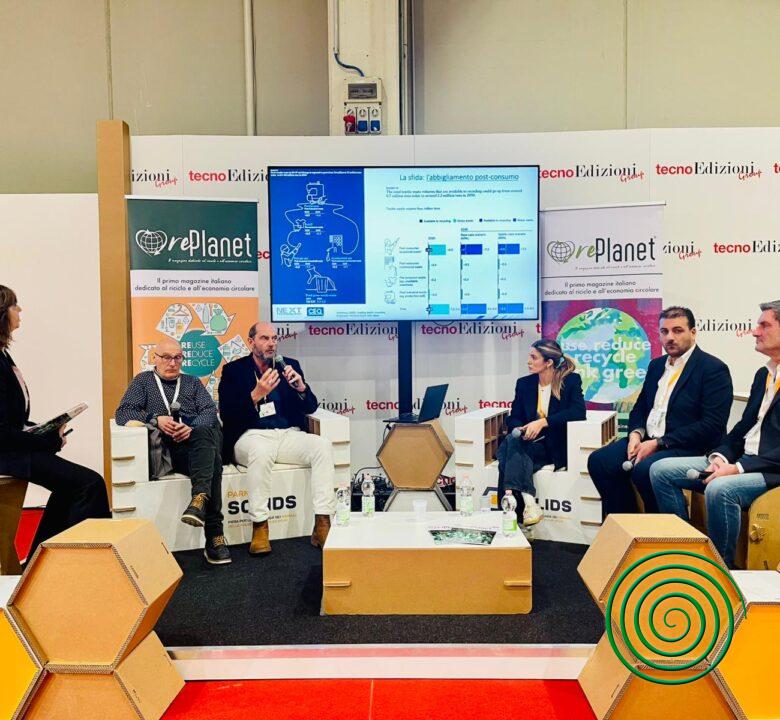

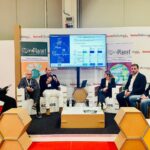
The future of the textile supply chain at the heart of Solids Parma: Corertex among the key players in the international debate
February 16, 2026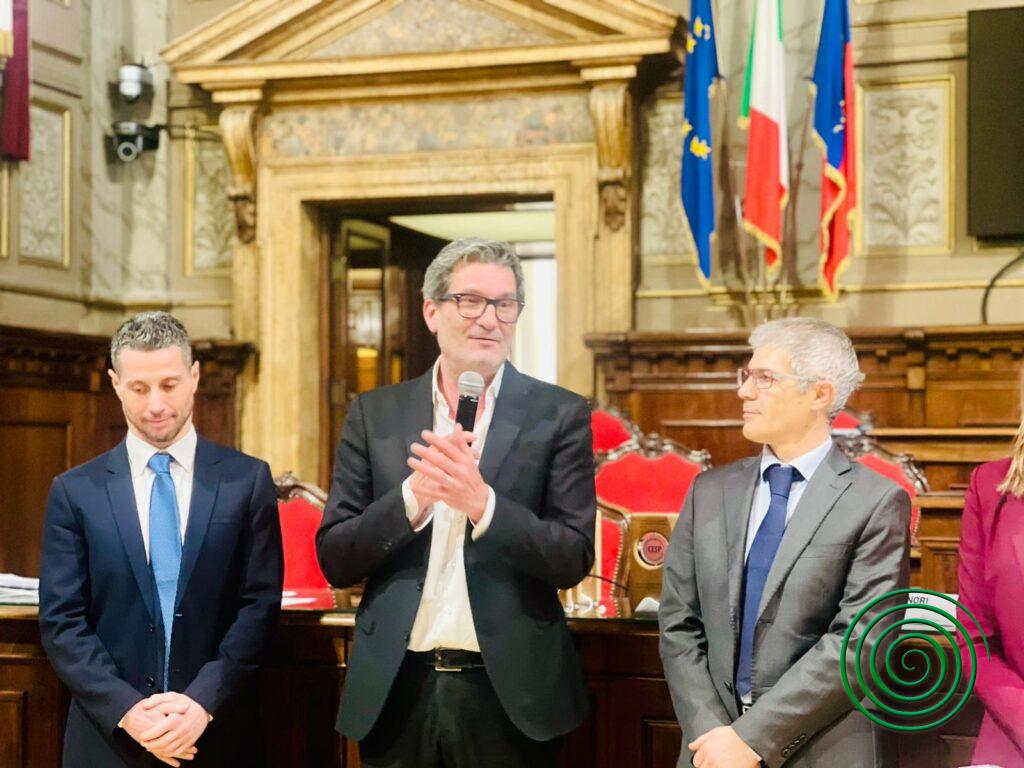
Corertex honoured in Rome by ICESP: a new national award for the value of textile reuse and recycling
The Consortium recognised among Italy’s best circular economy practices for its strategic contribution to textile resource valorisation
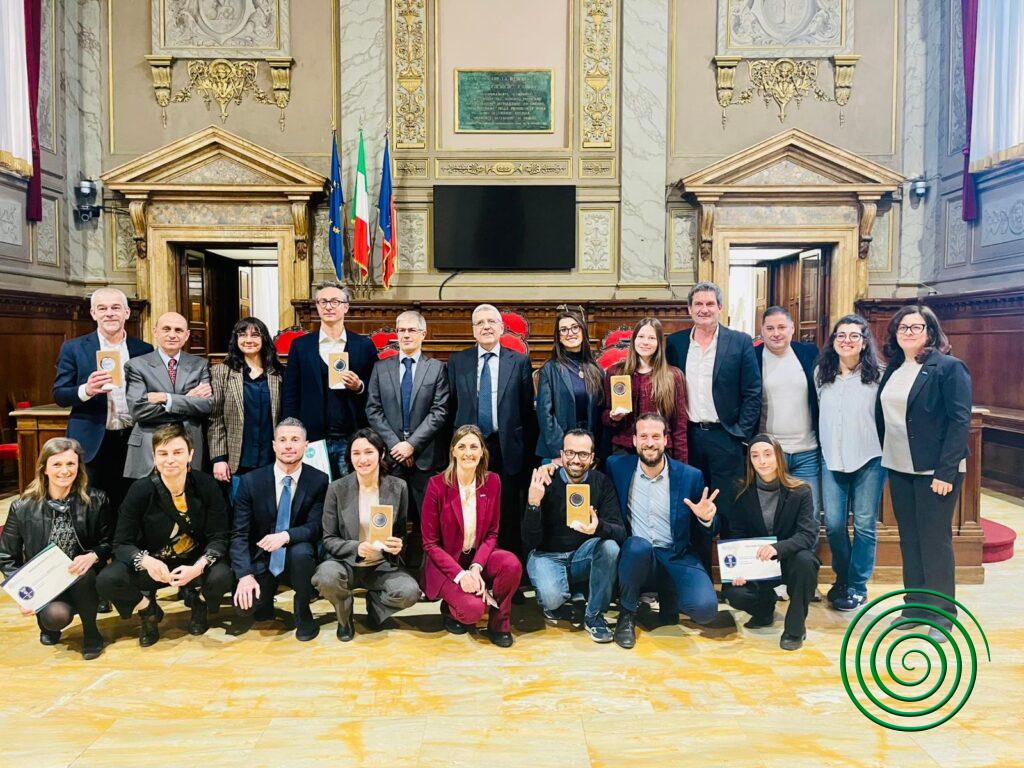
A new national award has confirmed Corertex’s central role in the Italian circular economy landscape. The Textile Reuse and Recycling Consortium was honoured in Rome during the ceremony dedicated to Best Environmental Practices, organised by the Italian Stakeholder Platform for the Circular Economy (ICESP) at Palazzo Valentini, the institutional headquarters of the Metropolitan City of Rome.
The jury’s decision was mainly based on two key elements: the efficient use of natural resources and the reduction of environmental impacts. This recognition highlights the Consortium’s daily work and, more broadly, the expertise developed by the Prato textile district in managing end-of-life textile materials.
According to the award motivations, the Corertex model is capable of recovering up to 90% of textile materials, drastically reducing the need for disposal. This result fits into the wider context of the Prato district, which is able to transform more than 100,000 tonnes of textile materials each year into a true industrial resource through a well-established “urban mine” model. Within this system, reuse plays a primary role because it extends the life of products without requiring new raw materials and without generating avoidable waste.
The ICESP award also highlighted another distinctive feature of the Corertex experience: the value of specialised human expertise. High-quality sorting remains one of the crucial phases of the reuse and recycling chain and requires skilled professionals, deep material knowledge and operational capability developed over time within the district. It is precisely this combination of technical expertise, industrial organisation and environmental sustainability that makes the Prato model relevant not only at national level, but also within the broader European framework.
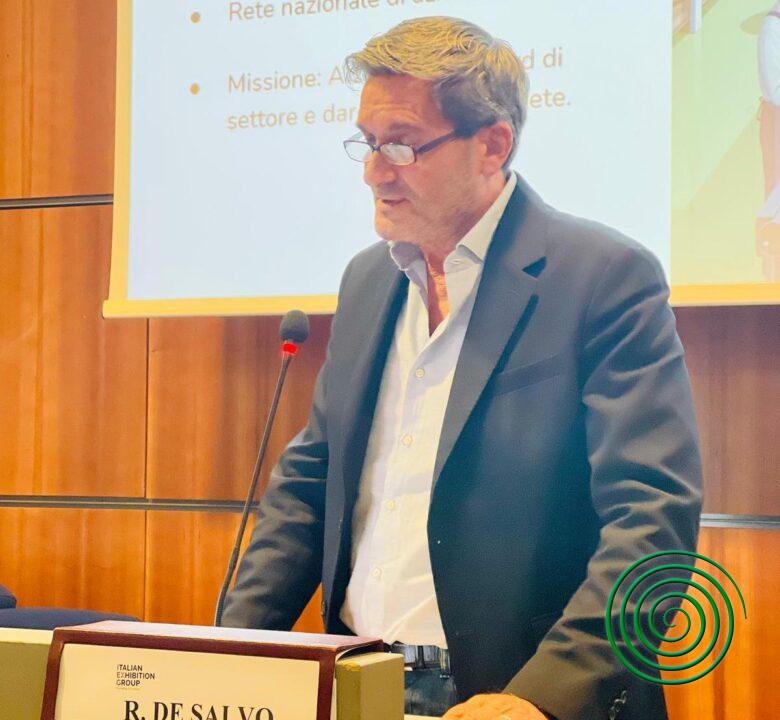
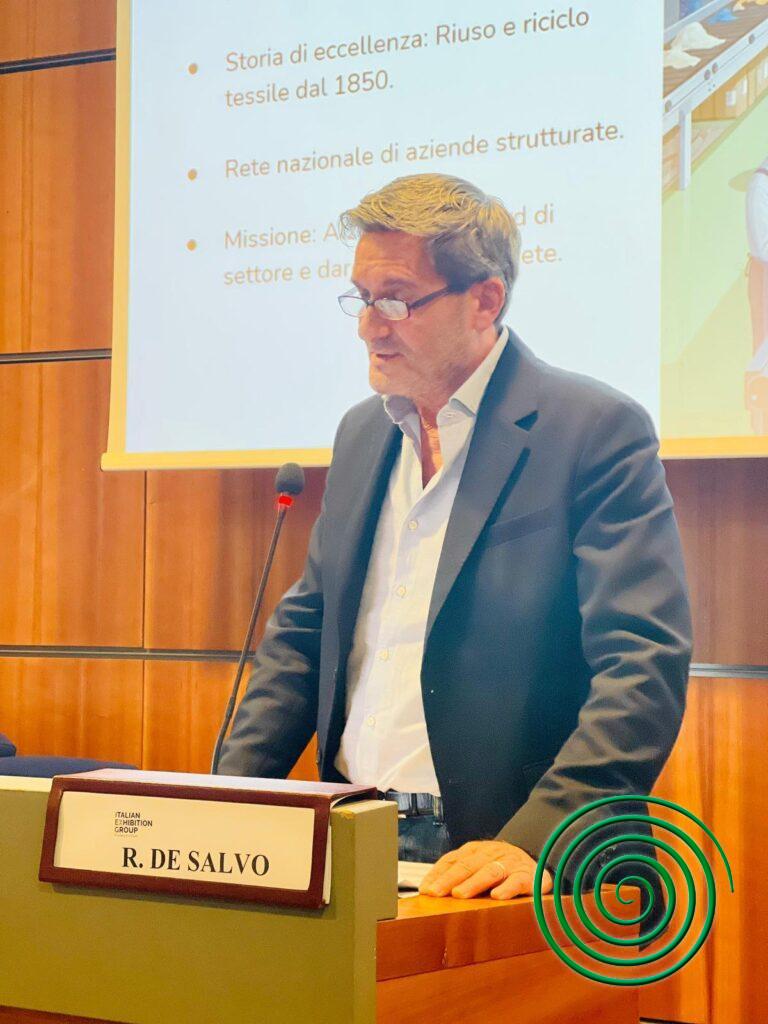
The award was collected by Consortium President Raffaello De Salvo, who stressed both the symbolic and strategic importance of the recognition. “Receiving awards of this level confirms that the direction taken by the Consortium is the right one,” he said. “This is a recognition of our commitment to sustainability, but it is also something we want to share with the entire Prato district, with its companies, workers and all the skills that make this system possible. Reuse and recycling are not marginal activities: they are one of the pillars of the circular economy and a concrete response to the need to reduce waste, dependence on imports and the consumption of new resources.”
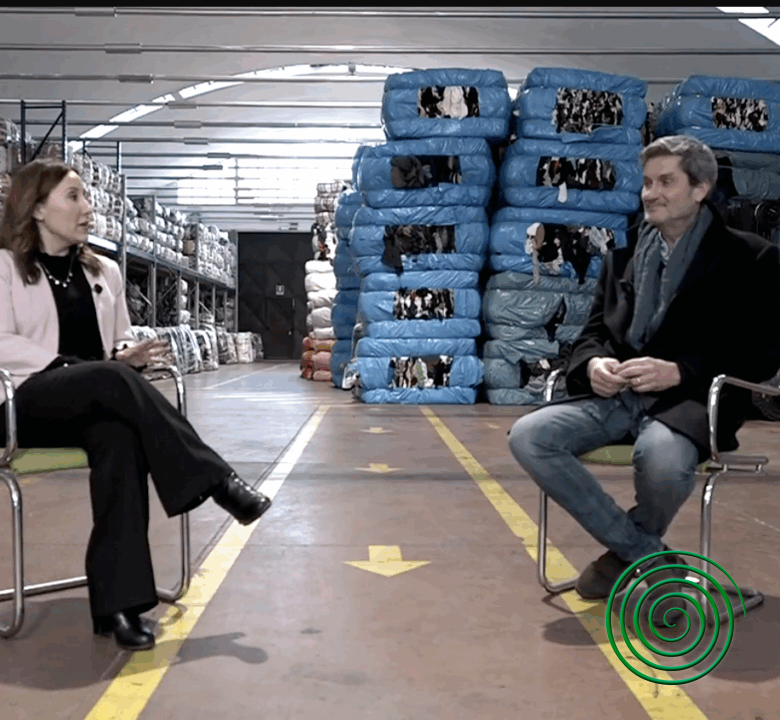
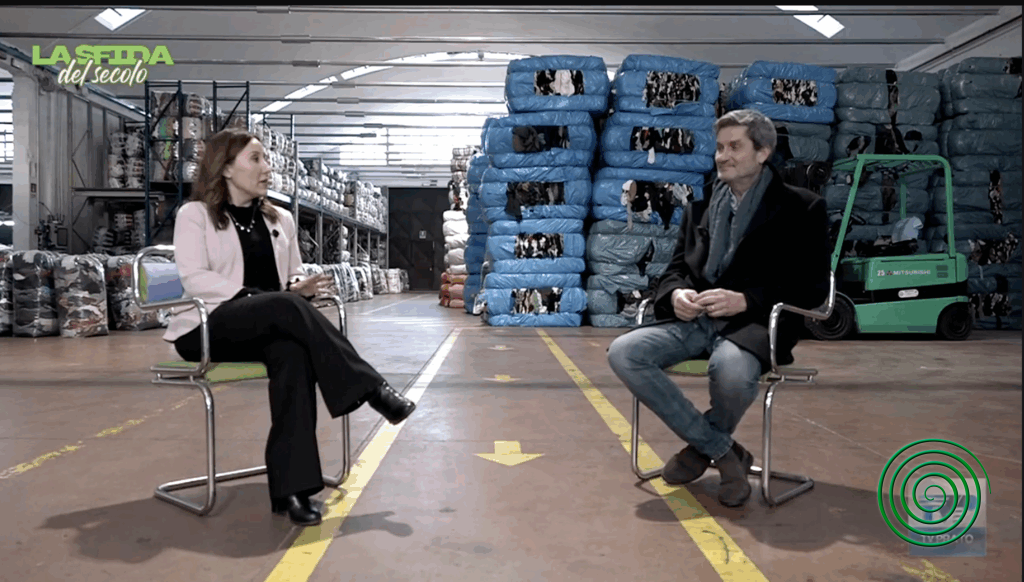
During the national event, Corertex also had the opportunity to present the daily work carried out in the Prato textile district through a video produced by Sdb Comunicazione. The film highlighted the professional expertise found across local companies, showing how textile reuse and recycling are the result of a structured, advanced and highly organised supply chain capable of combining sustainability, skilled employment and industrial innovation.
The award comes at a time when European and national sustainability policies are evolving rapidly around efficient resource use. For this reason, ICESP underlined how best practices now represent a concrete tool for turning strategic guidelines into real, replicable models capable of supporting the circular transition of production and territorial systems. Within this context, the Corertex experience is considered not only effective, but also scalable and replicable on a broader level.
The Consortium’s participation in the Rome ceremony also offered an opportunity to bring several key issues concerning the Prato district back into the national spotlight: the excellence of recycled textiles, the value of Prato’s recycled carded wool, the ongoing path toward IGP certification, and the need for clearer and more structured political responses on environmental and industrial matters.
This latest recognition further strengthens Corertex’s position as an authoritative stakeholder in the transformation of the textile supply chain, confirming the value of a model that combines material recovery, waste reduction, protection of employment and a strategic vision for the future.
Credits:
Economy – Local editions: Prato